

Victims Rights Amendment Undermines The Presumption of Innocence!
- Sep 1, 2025
- 3 min read
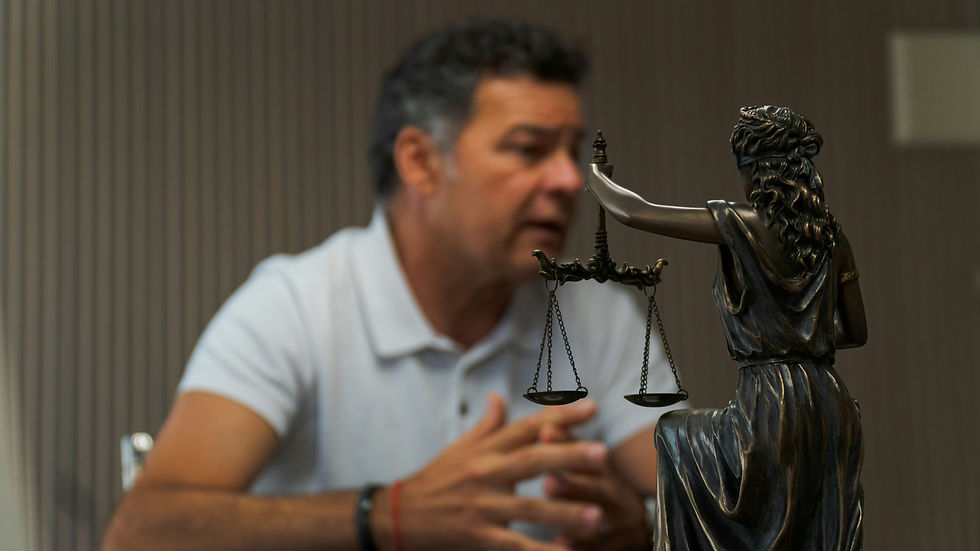
Presumed Innocent, Yet Punished: How Colorado’s Victims’ Rights Amendment Impacts the Accused
In the United States, every person accused of a crime is supposed to be presumed innocent until proven guilty. But in practice, the mere accusation can shatter lives long before trial. Careers are lost, families are strained, reputations are destroyed—and in the case of sex crime allegations, the damage is often irreparable even without a conviction.
Sex crime cases are uniquely vulnerable to this injustice. They rarely involve physical evidence and often come down to one person’s word against another. Despite this, Colorado’s Victims’ Rights Amendment gives alleged victims extraordinary power to influence a defendant’s everyday life while they await trial.
Rights on Paper, Restrictions in Reality
Under this system, an accuser can object to the accused working, attending family events, traveling, or even visiting with their own loved ones—regardless of whether there is any legitimate safety concern or risk of flight. Judges frequently honor these objections, even when defendants have already demonstrated responsibility by turning themselves in, posting large bonds, or pledging family homes as collateral to guarantee appearances.
The cost is devastating. Defendants miss funerals, weddings, graduations, and other once-in-a-lifetime milestones. They lose jobs, educational opportunities, and sometimes even the ability to maintain relationships with their children or spouses. Courts often delay decisions for days or weeks, giving alleged victims time to object. By the time approval is granted—if it is—the opportunity has already passed.
A Constitutional Contradiction
This raises a profound question of justice: how can the Constitution promise the presumption of innocence, while the legal system permits defendants to be punished as though they are already guilty? The balance between protecting victims and upholding constitutional rights is delicate, but when accusations alone strip people of basic freedoms, the scales tip dangerously away from fairness.
Until the system reconciles this contradiction, the presumption of innocence in Colorado remains more of an ideal than a reality—especially for those facing the stigma of a sex crime allegation.
How the VRA is impacting Constitutional Rights in Colorado:
1. Presumption of Innocence Is Undermined
A defendant awaiting trial is supposed to be treated as innocent until proven guilty. Yet under Colorado’s Victims’ Rights Amendment, victims can urge the court to block requests like attending a parent’s funeral, visiting a dying loved one, watching a child graduate, or even maintaining contact with their own children. These are not trivial privileges—they are the most basic elements of family and human life. To deny them before conviction is to impose punishment without a verdict.
⸻
2. Victims Become Gatekeepers of Punishment
Victims deserve a voice, but not a veto over a defendant’s humanity. Allowing them to effectively decide whether someone can say goodbye to a dying friend, witness a child’s milestone, or nurture their parental bond shifts the balance of power unfairly. The role of victims is to be heard, not to determine restrictions that amount to punishment prior to trial.
⸻
3. No Legitimate Safety Justification
Supervised release, secured travel, or controlled visitation can ensure safety while still permitting compassion. Preventing someone from traveling to a funeral, a hospital bedside, or a graduation doesn’t meaningfully protect victims or the public—it only inflicts suffering. That transforms the victim’s voice into a tool of retribution rather than protection, which is not the purpose of justice.
⸻
4. Human Dignity Demands Better
Even convicted prisoners are often allowed furloughs to attend funerals or see family under strict supervision. When unconvicted defendants are denied the same opportunities, the system treats them more harshly than those already found guilty. That is not just unjust—it is inhumane.
⸻
5. A System Out of Balance
Justice must weigh compassion for victims with fairness to the accused. But when defendants can be barred from the most fundamental moments of life—farewells, milestones, parenthood—the scale has tipped too far. A system that allows such denials is no longer balanced; it is punitive by design before guilt is ever established.
⸻
The Colorado VRA, while well-intentioned, enables victims to inflict life-altering punishments on people who are still legally innocent. Blocking a defendant from attending a parent’s funeral, seeing a dying friend, celebrating a child’s graduation, or even spending time with their own children does nothing to protect society. It only undermines due process, strips away dignity, and erodes the very foundation of justice.
Fighting for Justice
At our firm, we understand it’s not only the accused who suffer—families do too. When you or a loved one is facing criminal allegations, the fear, stress, and restrictions can feel overwhelming. That’s why we fight every day to uphold the presumption of innocence and protect the futures of our clients and their families.
If you or someone you care about has been accused of a crime, don’t wait. Call us today, and let’s work together to safeguard your rights, your freedom, and your family’s peace of mind.


Comments